What is the best way to bake bread with retained oven heat?
A masonry oven keeps giving long after the flames die. Learning to bake in that falling heat is where a built in oven truly earns its keep.
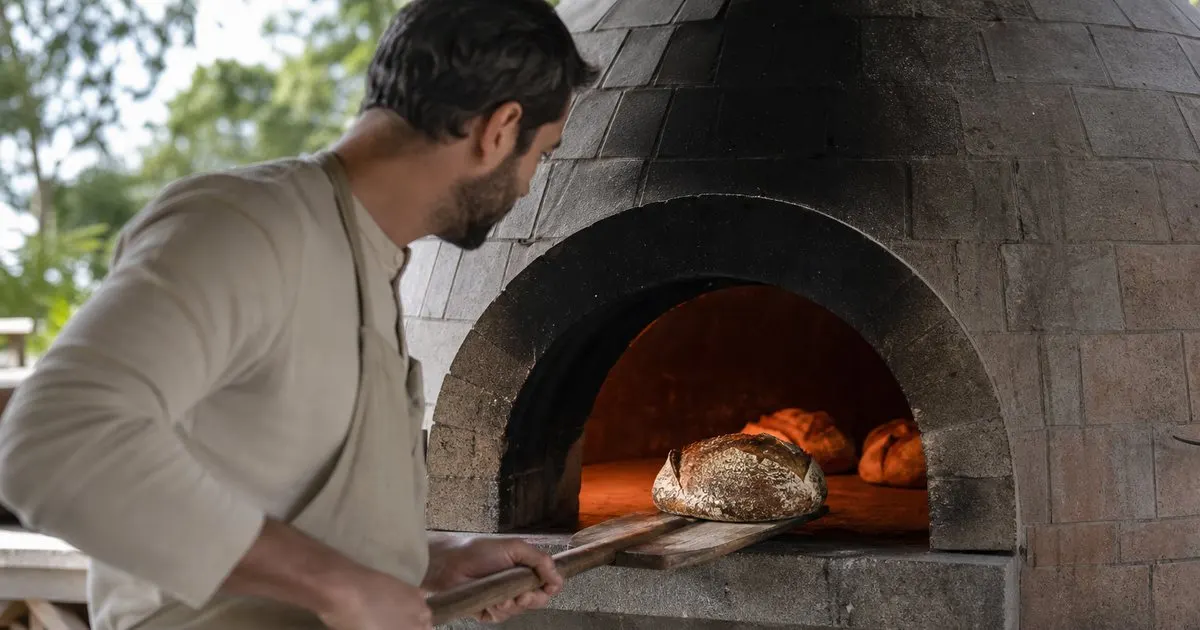
Understanding the heat curve after the fire
A wood fired oven cooks in two distinct modes. With a live fire in the dome it is a radiant broiler that finishes a pizza in a minute or two. After the fire is raked out and the door goes on, the masonry that soaked up hours of heat becomes a slow, even radiator. The thicker and better insulated the oven, the longer that second phase lasts. A well built dome can hold bread temperatures for hours and roasting temperatures well into the next day, which is why owners of serious ovens plan cooking in sequences rather than single meals. Related: How hot does a wood fired pizza oven need to get for Neapolitan?
The cooking floor and the dome cool at different rates, and this is the detail that separates good bread from scorched bottoms. Immediately after a pizza session the floor is often hotter than the air, having been in direct contact with coals. Bread loaded at that moment will burn underneath before the crumb sets. The usual practice is to sweep the floor, close the door, and wait until the floor and dome equalize somewhere in the range typically used for artisan bread, which most bakers put around 450 to 550 degrees Fahrenheit depending on loaf size and style.
Keep reading: How hot does a wood fired pizza oven need to get for Neapolitan?, Which is better for backyard entertaining, wood fired or gas pizza ovens?, What refractory materials keep a built in pizza oven radiating even heat?. See how Fornaluxe helps you the artisan guide to wood-fired and built-in pizza ovens.
Preparing the oven for a bake
The sequence starts with a clean floor. Rake the coals out into a metal ash bucket, then use a damp mop or a brass brush to remove ash and any stray embers; ash left behind gives a bitter crust. Some bakers wipe the floor with a wet cloth on a pole, which also cools the surface a few degrees and creates a puff of steam that seals in humidity. Put the door in place and let the oven rest, checking temperature with an infrared thermometer aimed at the floor and separately at the dome.
Steam is the other ingredient. Bread baked in a dry oven sets its crust early and cannot expand fully, giving a dense loaf with a dull crust. Commercial bakers inject steam; at home the same effect comes from a shallow pan of water set inside just before loading, a quick spray of water onto the walls, or the moisture left by a damp mop. A tight fitting insulated door traps that steam and the heat behind it. If your oven came with a thin sheet metal door, an upgrade to a thick insulated door is one of the better accessories you can buy, and we say that knowing we may earn a commission on some links. Related: Which is better for backyard entertaining, wood fired or gas pizza ovens?
Loading, timing, and reading the loaf
Load loaves quickly to avoid losing heat, working from the back of the oven forward and leaving space between them. A wooden peel dusted with semolina or rice flour releases dough cleanly. Once the door is on, resist opening it for the first stretch of the bake; every peek drops the temperature and vents steam. Rotation is rarely needed in a well built dome, but if one side of your oven runs hotter, turn the loaves once partway through. Related: How long does a premium pizza oven take to reach cooking temperature?
Time is less useful than observation in a falling oven, since each bake starts from a slightly different temperature. Judge doneness by color, by the hollow sound of a tapped base, and, if you want certainty, by an instant read thermometer pushed into the center. Larger loaves and enriched doughs tolerate the lower end of the temperature range; lean, high hydration doughs want the oven hotter and the bake shorter. Keep a notebook for the first dozen bakes recording the floor temperature at loading and the result. Owners who do this dial in their oven remarkably fast.
Extending the sequence through the following day
Once the bread is out, the oven is still far too valuable to leave idle. Braises, beans, and roasts go in as the temperature drifts down through the roasting range, and by the following morning many ovens still hold enough warmth for slow cooked dishes, drying fruit, or proofing dough. This layered use is the real argument for a heavy, well insulated built in oven over a lighter freestanding unit: the extra mass that costs more to heat also gives back for far longer. Related: What refractory materials keep a built in pizza oven radiating even heat?
The practical constraint is insulation and door quality. An oven with a thin insulating layer under the floor and around the dome loses heat to the base and the enclosure and may be lukewarm by morning, while a properly insulated oven with a tight door can surprise you. If retained heat cooking matters to you, weigh insulation thickness and door design heavily when comparing ovens, and ask the installer what insulation actually goes under the floor rather than assuming. It is one of the few specifications that directly predicts how the oven will perform two days after you light it.
- After pizza, rake out the coals, clean the floor, and let floor and dome equalize before loading bread.
- Add steam with a water pan, a spray, or a damp mop, and use a thick insulated door to trap it.
- Judge bread by color, sound, and internal temperature, not by a fixed clock time.
- Roast, braise, and proof in the remaining heat, since heavier insulated ovens give back the longest.

Julien Jimenez
Julien Jimenez is an independent software builder based in Paris. He designs, ships, and operates focused SaaS products for small businesses and independent professionals. Read the full author page.
The Fire at the Center of Every Evening
The artisan guide to wood-fired and built-in pizza ovens. Fornaluxe is built to help you put this into practice.
Choose your ovenMore from the Fornaluxe blog
How hot does a wood fired pizza oven need to get for Neapolitan?

Which is better for backyard entertaining, wood fired or gas pizza ovens?
What refractory materials keep a built in pizza oven radiating even heat?
Get the complete wood-fired and built-in pizza ovens guide
Our full buying guide, the price guide, and new research as we publish it. One email, no spam, unsubscribe any time.