Which hardwoods should you burn in a luxury wood fired pizza oven?
The wood you burn sets flavor, heat, and how much soot lands on your dome. Choosing and storing it well matters nearly as much as the oven itself.
Why hardwood, and why it must be dry
Dense hardwoods burn hot and long and produce the steady bed of coals a pizza oven relies on for floor heat. Softwoods such as pine, fir, and spruce burn fast, spit resin, and coat the dome and flue with sticky soot that eventually becomes creosote. They also impart a turpentine note to food that no amount of good dough will hide. For a high end oven, hardwood is not a preference but a requirement, and most manufacturers say as much in their warranty terms. Related: What refractory materials keep a built in pizza oven radiating even heat?
Moisture content is the second half of the equation. Freshly cut wood is roughly half water by weight, and burning it wastes energy boiling that water off before the wood can actually heat the oven. Wet wood smolders, smokes heavily, and struggles to reach the temperatures Neapolitan style pizza demands. Properly seasoned firewood, generally understood as below about twenty percent moisture, lights easily, burns clean, and lets the dome clear to white far sooner. An inexpensive pin type moisture meter, pressed into a freshly split face, tells you in seconds whether a delivery is ready to burn. Related: How hot does a wood fired pizza oven need to get for Neapolitan?
Keep reading: How hot does a wood fired pizza oven need to get for Neapolitan?, Which is better for backyard entertaining, wood fired or gas pizza ovens?, What refractory materials keep a built in pizza oven radiating even heat?. See how Fornaluxe helps you the artisan guide to wood-fired and built-in pizza ovens.
The hardwoods that perform best in an oven
Oak is the workhorse for most American oven owners: widely available, dense, and slow burning with a neutral flavor. Hickory burns a little hotter and adds a more assertive smoke that suits roasts and bread as much as pizza. Maple and ash are mild, clean burning, and easy to split; ash in particular seasons faster than oak. Beech and birch are excellent where available, though birch bark can flare. Among fruitwoods, apple, cherry, and pecan are prized for a gentle sweetness in the smoke, and many owners keep a small stack for finishing a cook or for roasting meat once the pizzas are done.
Regional availability shapes the practical choice. In the Northeast and Midwest, oak, maple, and ash dominate firewood yards. In the South, hickory and pecan are common. On the West Coast, oak and almond are typical, with almond in particular regarded as a superb oven wood by those who can get it. Avoid anything treated, painted, or reclaimed from construction, as well as driftwood, which carries salt that corrodes stainless flue components. Skip pallet wood entirely; you cannot know what it has absorbed.
Split size, kiln dried versus seasoned, and where to buy
A pizza oven wants smaller splits than a fireplace. Pieces roughly two to three inches across ignite quickly and let you meter heat precisely during a cook, while a few larger splits are useful for building the initial bed of coals. Ask your supplier for oven or restaurant splits, since many firewood yards cut them specifically for wood fired kitchens. Kindling should be the same hardwood, split thin, rather than resinous softwood offcuts. Related: Which is better for backyard entertaining, wood fired or gas pizza ovens?
Kiln dried wood commands a premium and is worth it for owners who cook frequently and lack space to season wood themselves. It arrives ready to burn, lights reliably, and is free of the insects that sometimes ride along in seasoned cordwood. Naturally seasoned wood can be just as good if the supplier is honest about age and storage; check with a meter on delivery. Buying by the cord or half cord from a local yard is the most economical route, while boxed kiln dried bundles suit occasional cooks. Some products linked here may earn us a commission, which does not influence which woods we recommend. Related: How long does a premium pizza oven take to reach cooking temperature?
Storing firewood so it stays oven ready
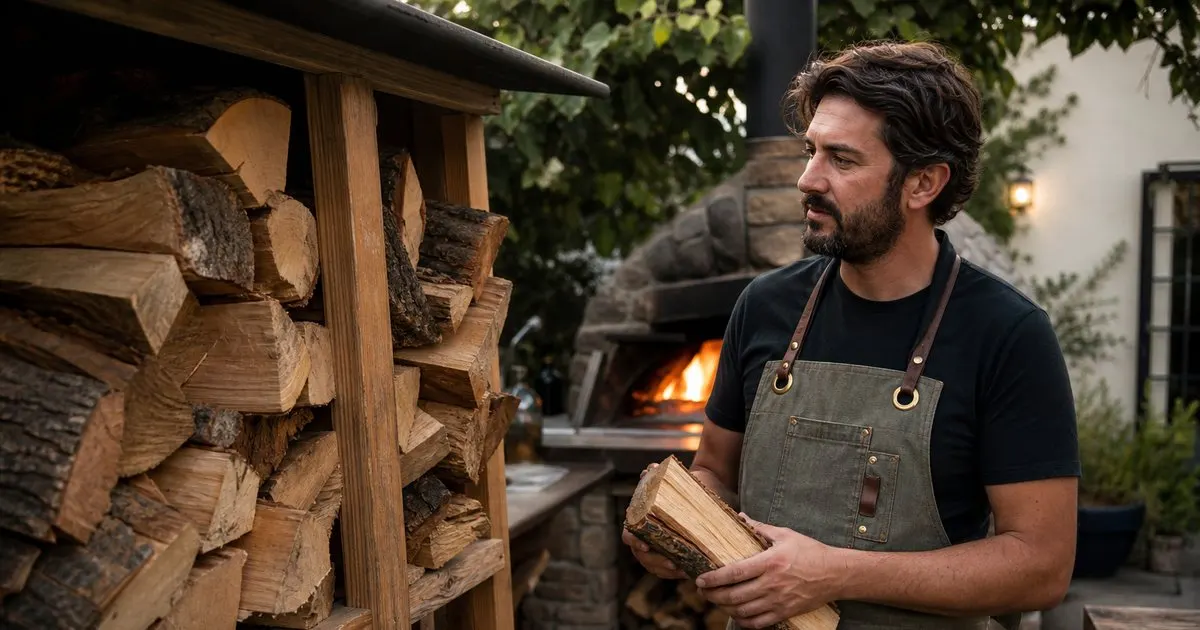
Good wood turns bad quickly in a damp pile on the ground. Stack splits on a raised rack that keeps them off soil, in a spot that gets sun and airflow, with the top covered and the sides open. A full tarp wrapped around the stack traps moisture and defeats the purpose. Keep the main stack a short distance from the house to discourage insects, and bring a few days of supply closer to the oven in a covered box or a niche built into the oven base.
Designers of luxury outdoor kitchens often integrate a wood storage cavity beneath the oven landing, and it is a genuinely useful feature, as long as it drains and ventilates. A sealed cavity that collects rain turns dry wood into a soggy mess within a season. Rotate stock so older wood is used first, and re-check moisture in spring after a wet winter. Owners who treat wood as an ingredient rather than fuel generally find their oven easier to run and their pizzas more consistent.
- Burn only seasoned or kiln dried hardwood; softwoods smoke, spit resin, and coat the dome.
- Oak, hickory, maple, ash, and fruitwoods such as apple and cherry are dependable oven choices.
- Ask for oven splits two to three inches across, with hardwood kindling rather than pine offcuts.
- Store wood raised, top covered, and sides open, and verify moisture with a meter before burning.

Julien Jimenez
Julien Jimenez is an independent software builder based in Paris. He designs, ships, and operates focused SaaS products for small businesses and independent professionals. Read the full author page.
The Fire at the Center of Every Evening
The artisan guide to wood-fired and built-in pizza ovens. Fornaluxe is built to help you put this into practice.
Choose your ovenMore from the Fornaluxe blog
How hot does a wood fired pizza oven need to get for Neapolitan?

Which is better for backyard entertaining, wood fired or gas pizza ovens?
What refractory materials keep a built in pizza oven radiating even heat?
Get the complete wood-fired and built-in pizza ovens guide
Our full buying guide, the price guide, and new research as we publish it. One email, no spam, unsubscribe any time.