What refractory materials keep a built in pizza oven radiating even heat?
The materials behind the surface store and return the heat. Here is what makes an oven cook evenly.
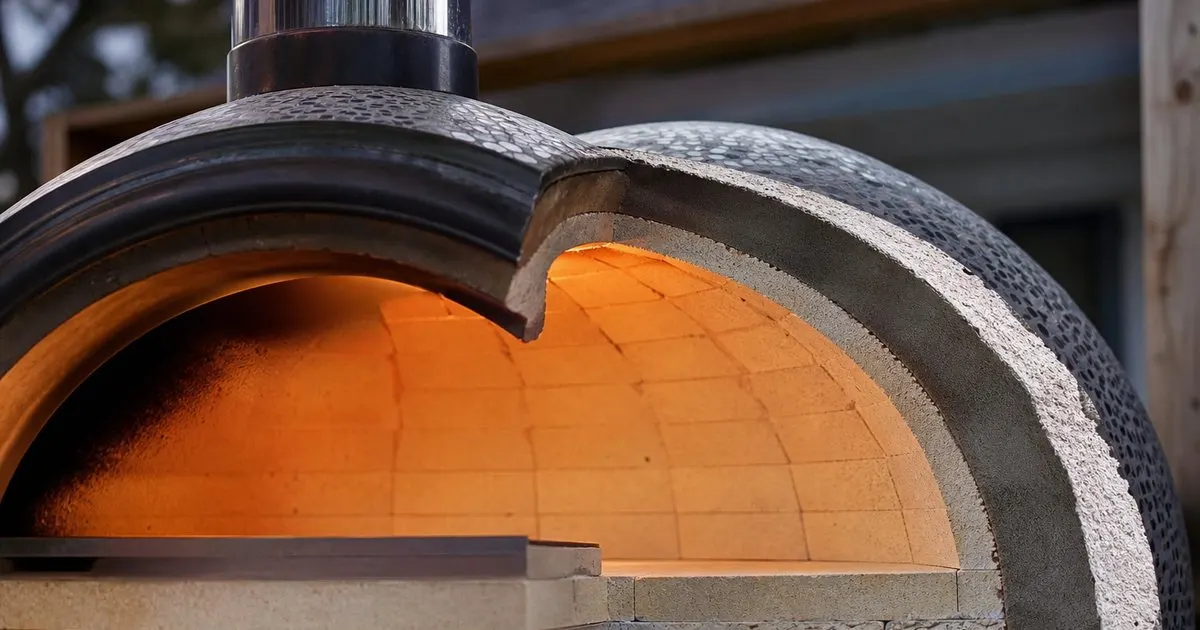
Dense refractory brick or high quality cast refractory stores a large reservoir of heat and radiates it evenly onto the pizza, while a thick, quality cooking floor holds the intense base heat and recovers between pizzas. Paired with good insulation to keep that heat inside, these materials are what let an oven cook consistently, one pizza after another.
Why refractory materials matter
A great pizza oven works by storing heat in dense materials and radiating it steadily back onto the pizza. The refractory core is what makes even, sustained cooking possible. Related: How hot does a wood fired pizza oven need to get for Neapolitan?
Without proper thermal mass, an oven cannot hold or return the heat a good crust needs. The materials, not the flame alone, do much of the cooking. Related: Why does oven dome shape influence the flavor of your pizza?
Keep reading: How hot does a wood fired pizza oven need to get for Neapolitan?, Which is better for backyard entertaining, wood fired or gas pizza ovens?, How long does a premium pizza oven take to reach cooking temperature?. See how Fornaluxe helps you the artisan guide to wood-fired and built-in pizza ovens.
Dense refractory brick and cast material
Quality refractory brick or dense cast refractory stores a large reservoir of heat and releases it evenly. This is what lets the oven cook one pizza after another consistently. Related: Which is better for backyard entertaining, wood fired or gas pizza ovens?
The density and quality of these materials separate a fine oven from a mediocre one. Thin or poor refractory cannot hold the heat, so performance suffers.
The cooking floor
The floor takes the intense base heat that a crust needs, so its material and thickness are critical. A thick, high quality floor holds heat and recovers quickly between pizzas.
A thin floor loses its heat to the first pizza and cannot recover in time for the next. The floor is where even cooking either succeeds or fails. Related: How long does a premium pizza oven take to reach cooking temperature?
Mass and insulation together
Refractory mass stores the heat, and insulation around it keeps that heat inside rather than bleeding away. The two work as a pair to sustain even temperatures.
An oven with good mass but poor insulation wastes its heat, while good insulation without mass has little to retain. Both together deliver the steady, radiant heat that defines a great oven.
- Refractory mass stores and radiates the heat that cooks the pizza
- Dense brick or cast refractory sustains even, repeated cooking
- A thick, quality floor holds base heat and recovers quickly
- Mass and insulation work as a pair to keep heat even

Julien Jimenez
Julien Jimenez is an independent software builder based in Paris. He designs, ships, and operates focused SaaS products for small businesses and independent professionals. Read the full author page.
Frequently asked questions
Why does thermal mass matter so much?
Because the oven cooks by storing heat and radiating it back onto the pizza. Dense refractory mass holds and returns that heat evenly, letting the oven cook consistently rather than spiking and fading.
What makes the cooking floor important?
The floor delivers the intense base heat a crust needs. A thick, high quality floor holds that heat and recovers quickly, so the second pizza cooks as well as the first.
The Fire at the Center of Every Evening
The artisan guide to wood-fired and built-in pizza ovens. Fornaluxe is built to help you put this into practice.
Choose your ovenMore from the Fornaluxe blog
How hot does a wood fired pizza oven need to get for Neapolitan?

Which is better for backyard entertaining, wood fired or gas pizza ovens?
How long does a premium pizza oven take to reach cooking temperature?
Get the complete wood-fired and built-in pizza ovens guide
Our full buying guide, the price guide, and new research as we publish it. One email, no spam, unsubscribe any time.