How close can a built in pizza oven sit to your house?
Clearances to combustibles, permits, and safety listings decide where an oven can legally and safely go. Settling this early saves expensive redesigns later.
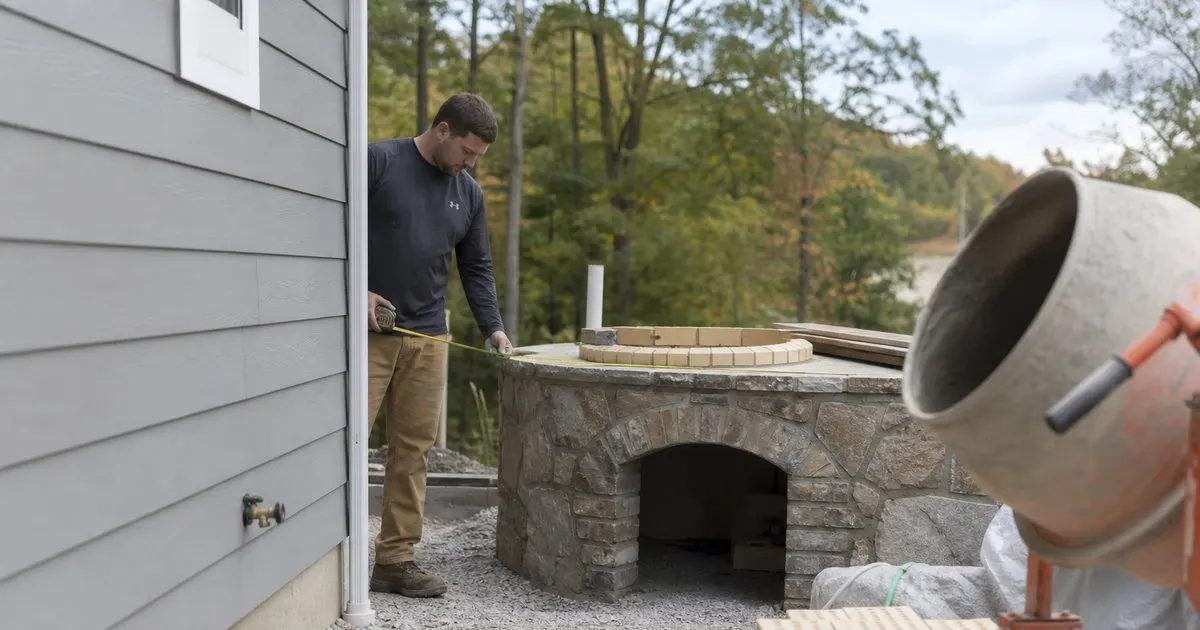
Listed ovens versus site built masonry
The distance an oven needs from a wall, a fence, a pergola post, or an eave depends first on what kind of oven it is. A factory built modular oven that has been tested and listed by a recognized safety laboratory comes with documented clearances to combustible materials, printed in the manual and on a data plate. Those numbers are the ones a building inspector will apply, and for a well insulated modular oven in a non-combustible enclosure they can be surprisingly modest. A custom brick oven built on site by a mason has no such listing, and in most jurisdictions it is treated like a masonry fireplace, which means the inspector applies the general code clearances for masonry heating appliances. Related: What refractory materials keep a built in pizza oven radiating even heat?
This distinction shapes the whole design. If you are placing an oven close to the house, under a covered patio, or in a tight courtyard, a listed modular oven gives you a defined, defensible set of numbers. A site built oven may be beautiful, but it can push you into larger clearances and more documentation. Neither is wrong, but the choice should be deliberate, and it is worth asking any custom builder how they intend to demonstrate compliance before a shovel goes in the ground.
Keep reading: How hot does a wood fired pizza oven need to get for Neapolitan?, Which is better for backyard entertaining, wood fired or gas pizza ovens?, What refractory materials keep a built in pizza oven radiating even heat?. See how Fornaluxe helps you the artisan guide to wood-fired and built-in pizza ovens.
What clearances actually cover
Clearance requirements address three things: the oven body and its heat, the flue pipe, and the hot exhaust leaving the chimney. The dome of a properly insulated oven inside a masonry enclosure gets only warm to the touch, and the enclosure itself is non-combustible, so the primary concern is often the flue. Chimney pipe manufacturers specify a minimum distance between the pipe and any wood framing, and that clearance must be maintained through every roof and wall penetration with the correct listed components. Exhaust at the cap should not discharge onto a roof surface, into an attic vent, or near a window that can be opened. Related: How hot does a wood fired pizza oven need to get for Neapolitan?
Combustibles are broader than most homeowners realize. Wood siding, vinyl siding, composite decking, pergola beams, patio umbrellas, wood fences, and stored firewood all count. So does the wood framing behind stucco. An oven placed on a wood deck needs an engineered base that isolates heat and carries the weight, since a built in oven with its enclosure can weigh well over a ton. If your design puts the oven near any of these, the safest approach is a non-combustible enclosure with air gaps, insulation between the dome and the enclosure, and a flue kept at its listed distance from every framing member. Related: Which is better for backyard entertaining, wood fired or gas pizza ovens?
Permits, codes, and the inspector's view
Most US municipalities require a permit for a permanent outdoor oven, and many require one even for a large freestanding unit on a cart if it is connected to gas. The relevant rules typically come from the residential building code adopted locally, the mechanical code for chimneys and vents, and sometimes a fire code overlay in wildfire prone areas. Some homeowners associations add their own rules about placement and appearance. Getting the permit before building is far cheaper than removing a finished oven, and the permit record also matters when you sell the house.
Inspectors focus on a few things: the listing and clearances of the oven and flue, the structural adequacy of the base and enclosure, the chimney height and termination, and the electrical or gas connections if any. Bring the oven manual, the flue manufacturer's installation instructions, and a simple site plan showing distances to the house, property lines, and any structures. Engaging the inspector early, before the design is final, tends to make the whole process smoother. A good installer will handle much of this, which is one reason we recommend professional installation for anything built in.
Designing for safety and daily use
Beyond code minimums, think about how the oven will be used. Sparks and embers leave the mouth when wood is added or coals are moved, so the landing and the floor in front of the oven should be non-combustible for a comfortable distance. Overhead, a pergola with a fabric shade directly above a chimney cap is asking for trouble no matter what the clearance chart says. Provide storage for wood a step or two away, not tucked against the hot side of the enclosure, and route foot traffic so guests are not walking past an open oven mouth with a peel swinging through. Related: How long does a premium pizza oven take to reach cooking temperature?
In wildfire prone regions, add a spark arrestor to the cap, keep vegetation cleared around the oven area, and consider whether local burn restrictions will limit use on high risk days. Insurance carriers occasionally ask about outdoor cooking appliances, so keep the permit and inspection documents together with the oven manual. None of this is onerous once planned. A built in oven designed with clearances in mind from the first sketch fits naturally into the outdoor kitchen, sits safely near the house, and passes inspection without drama. If any product we link to earns us a commission, it does not affect what we recommend here.
- Listed modular ovens carry documented clearances; site built masonry ovens are treated like fireplaces.
- The flue pipe usually dictates the tightest clearance, and every penetration needs listed components.
- Most cities require a permit, so bring the manual, flue instructions, and a site plan with distances.
- A non-combustible landing, cleared overhead space, and a spark arrestor make daily use safer.

Julien Jimenez
Julien Jimenez is an independent software builder based in Paris. He designs, ships, and operates focused SaaS products for small businesses and independent professionals. Read the full author page.
The Fire at the Center of Every Evening
The artisan guide to wood-fired and built-in pizza ovens. Fornaluxe is built to help you put this into practice.
Choose your ovenMore from the Fornaluxe blog
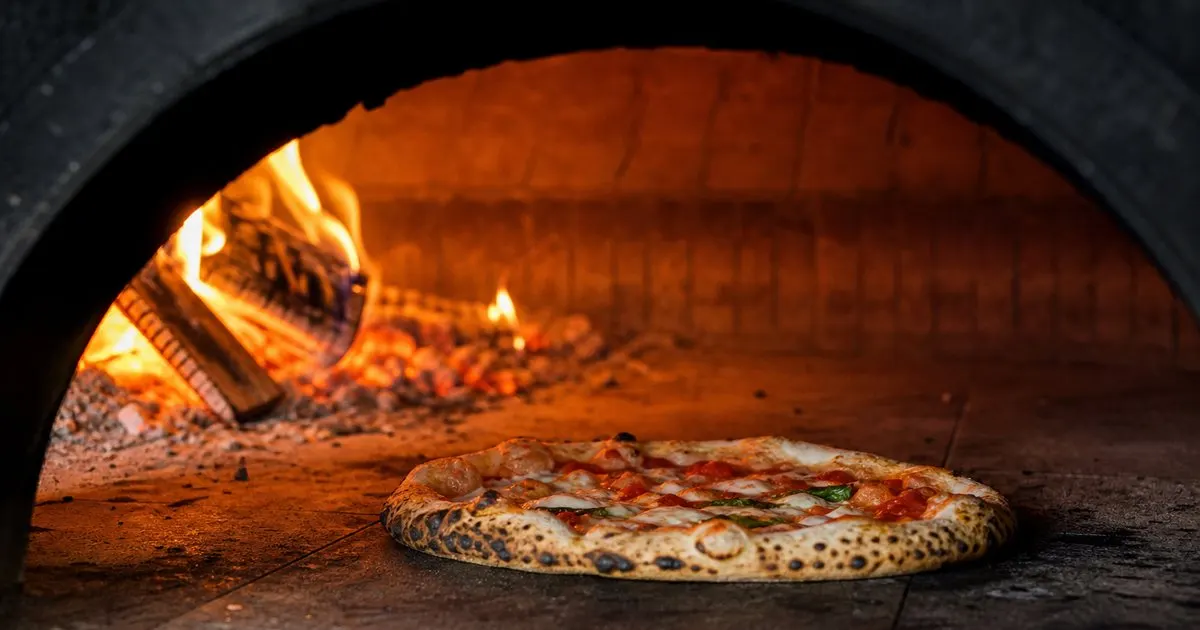
How hot does a wood fired pizza oven need to get for Neapolitan?

Which is better for backyard entertaining, wood fired or gas pizza ovens?
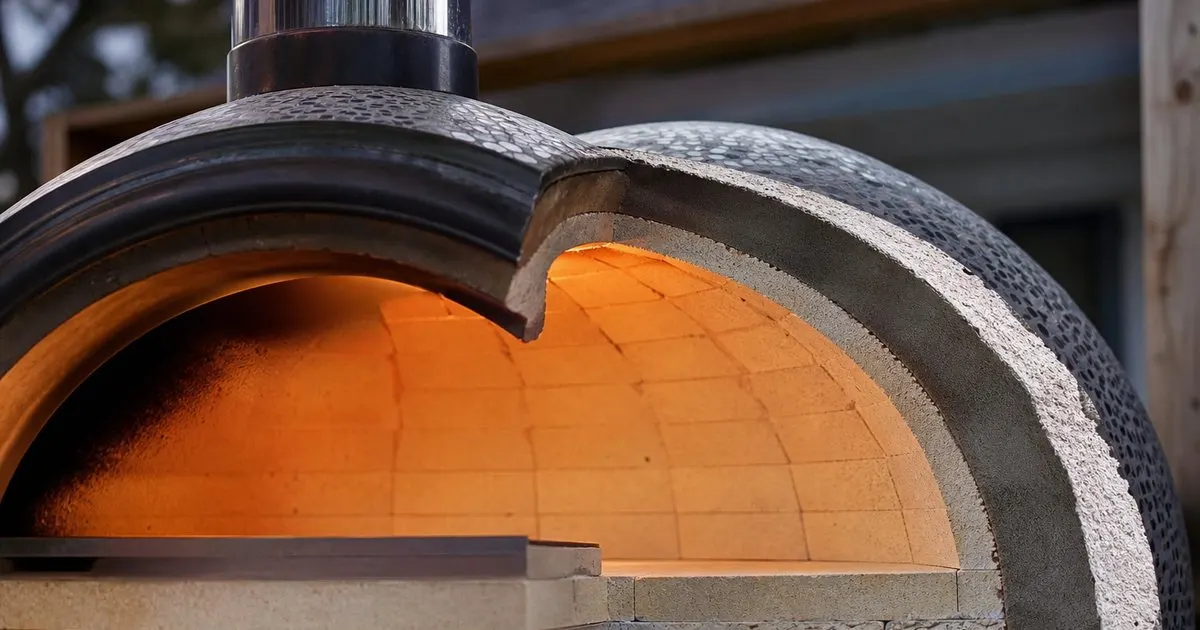
What refractory materials keep a built in pizza oven radiating even heat?
Get the complete wood-fired and built-in pizza ovens guide
Our full buying guide, the price guide, and new research as we publish it. One email, no spam, unsubscribe any time.