Why does cooking floor thickness change the crust of a wood fired pizza?
The hearth is where the crust is made. Its mass, material, and thickness decide how fast it recovers between pizzas and whether the base comes out leopard spotted or pale.
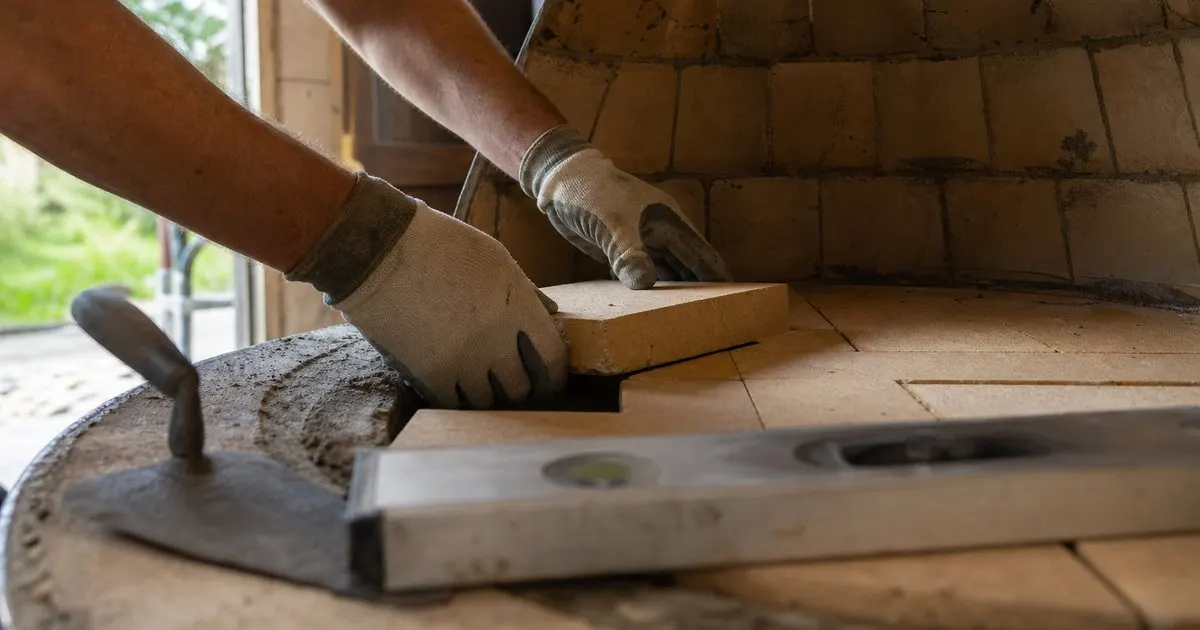
The floor cooks the bottom, the dome cooks the top
A pizza in a wood fired oven is cooked from two directions. The dome radiates heat downward onto the toppings and the rim, while the floor conducts heat directly into the base of the dough. The dome's heat is replenished continuously by the flame. The floor's heat is not: every pizza that lands on it pulls heat out of the surface, and that heat has to be replaced from the mass below and from the fire beside it. How quickly the floor gives up heat to the dough, and how quickly it recovers, is set by the material and the thickness of the hearth. Related: How hot does a wood fired pizza oven need to get for Neapolitan?
This is why two ovens at the same measured floor temperature can produce different crusts. A thin floor over minimal mass may read the right number on an infrared thermometer but drop sharply the moment dough touches it, giving a pale, slightly soft base. A thick, dense floor holds a reservoir of heat behind the surface and keeps pushing energy into the dough for the full bake, producing the charred leopard spotting Neapolitan enthusiasts prize. Understanding this helps you interpret manufacturer specifications that otherwise read as dry numbers. Related: How long does a premium pizza oven take to reach cooking temperature?
Keep reading: How hot does a wood fired pizza oven need to get for Neapolitan?, Which is better for backyard entertaining, wood fired or gas pizza ovens?, What refractory materials keep a built in pizza oven radiating even heat?. See how Fornaluxe helps you the artisan guide to wood-fired and built-in pizza ovens.
How thickness affects recovery and consistency
Thicker floors, commonly in the range of about two to three inches in premium ovens, take longer to bring up to temperature but recover faster between pizzas because there is more stored heat below the surface. This matters most when entertaining: a floor that sags in temperature after three or four pizzas forces a pause while the fire rebuilds it, and the pizzas that follow come out inconsistent. A thicker hearth lets you run a dozen pizzas in a row with a similar bake on each. Thinner floors, closer to an inch or an inch and a half, suit ovens designed for quick weeknight use where a fast heat up is the priority and volume is low. Related: Which is better for backyard entertaining, wood fired or gas pizza ovens?
Thickness only works when the insulation beneath the floor is adequate. A thick hearth sitting on an uninsulated slab bleeds heat downward continuously, so the mass is fighting a losing battle. Premium built in ovens place a substantial layer of calcium silicate board or a similar insulating material under the hearth, then the hearth tiles on top, so stored heat can only go up into the food. When comparing ovens, ask for both numbers: floor thickness and under floor insulation thickness. One without the other tells you little about how the oven will actually cook. Related: What refractory materials keep a built in pizza oven radiating even heat?
Material choices and what they do to the crust
Dense firebrick is the most common hearth material in American built ovens: durable, widely available, and quick to transfer heat. It produces a crisp, well colored base and tolerates abuse from peels and scrapers. Cordierite and other engineered ceramic tiles are used in many modular ovens for their resistance to thermal shock and their smooth, easy to clean surface. Traditional Italian ovens often use a softer, lower density clay tile, sometimes called biscotto, which transfers heat more gently and is favored for very high temperature Neapolitan baking where a firebrick floor can scorch the base before the top is done.
The choice is a genuine trade off rather than a hierarchy. If you cook mostly at extreme temperature with a thin, wet Neapolitan dough, a gentler clay floor can give a more even crust. If you range across New York style, Roman pan pizzas, bread, and roasting, a dense firebrick or ceramic floor at moderate thickness handles all of it well and lasts for decades. Some premium builders offer a choice of floor material at ordering, and it is a decision worth making thoughtfully rather than accepting a default. We may earn a commission on ovens or accessories linked from this page; it never dictates which floors we favor.
Managing floor temperature during a cook
Even the best hearth benefits from technique. Keep the fire to one side and move it occasionally so the floor heats evenly rather than developing one hot zone. Between pizzas, rotate your landing spot to give each area a moment to recover, and use an infrared thermometer to check the actual surface before launching rather than guessing from the color of the dome. If the floor reads hot but bases come out pale, the problem is often a cold spot or a floor that has been mopped and is still damp; if bases scorch, the floor has been in contact with coals too recently or the dough is sitting too long before turning.
Over years of use the floor will wear. Firebrick develops a slight polish and occasional chipping at the edges; clay tiles can pit and eventually need replacement, which is why good ovens are designed with a removable floor. Sweep the floor before each cook, avoid metal scrapers on softer tiles, and never douse a hot floor with water to cool it. Treat the hearth as the working surface it is, and it will keep producing the crust that justified the oven in the first place.
- The floor conducts heat into the base while the dome radiates onto the top, and the floor is the part that depletes.
- Thicker hearths of roughly two to three inches recover faster and stay consistent through a long session.
- Under floor insulation is as important as thickness, so ask for both figures when comparing ovens.
- Firebrick and ceramic give a crisp base, while softer clay tiles bake more gently at extreme Neapolitan heat.

Julien Jimenez
Julien Jimenez is an independent software builder based in Paris. He designs, ships, and operates focused SaaS products for small businesses and independent professionals. Read the full author page.
The Fire at the Center of Every Evening
The artisan guide to wood-fired and built-in pizza ovens. Fornaluxe is built to help you put this into practice.
Choose your ovenMore from the Fornaluxe blog
How hot does a wood fired pizza oven need to get for Neapolitan?

Which is better for backyard entertaining, wood fired or gas pizza ovens?
What refractory materials keep a built in pizza oven radiating even heat?
Get the complete wood-fired and built-in pizza ovens guide
Our full buying guide, the price guide, and new research as we publish it. One email, no spam, unsubscribe any time.